Pumps are some of the hardest-working, least-noticed equipment in a commercial or industrial building. They also tend to be among the biggest, quietest contributors to a facility’s energy bill — and because they rarely fail outright while running inefficiently, that waste can go unnoticed for years. If no one has taken a close look at your pump system’s actual performance against its design specs recently, there’s a good chance it’s costing more to run than it should.
How Pump Systems End Up Wasting Energy
Inefficiency in a pump system usually isn’t the result of one dramatic problem — it’s the accumulation of several smaller ones. A pump that was originally sized for a building’s peak demand may now be oversized for how the building actually operates day to day, forcing it to throttle or cycle inefficiently. Worn impellers and wear rings let a pump’s hydraulic performance degrade gradually, so the motor draws more power to deliver the same output it always has. Systems running on fixed-speed drives where demand actually varies throughout the day are another common source of waste, since the pump runs at full output even when full output isn’t needed.
What a Pump Optimization Assessment Looks At
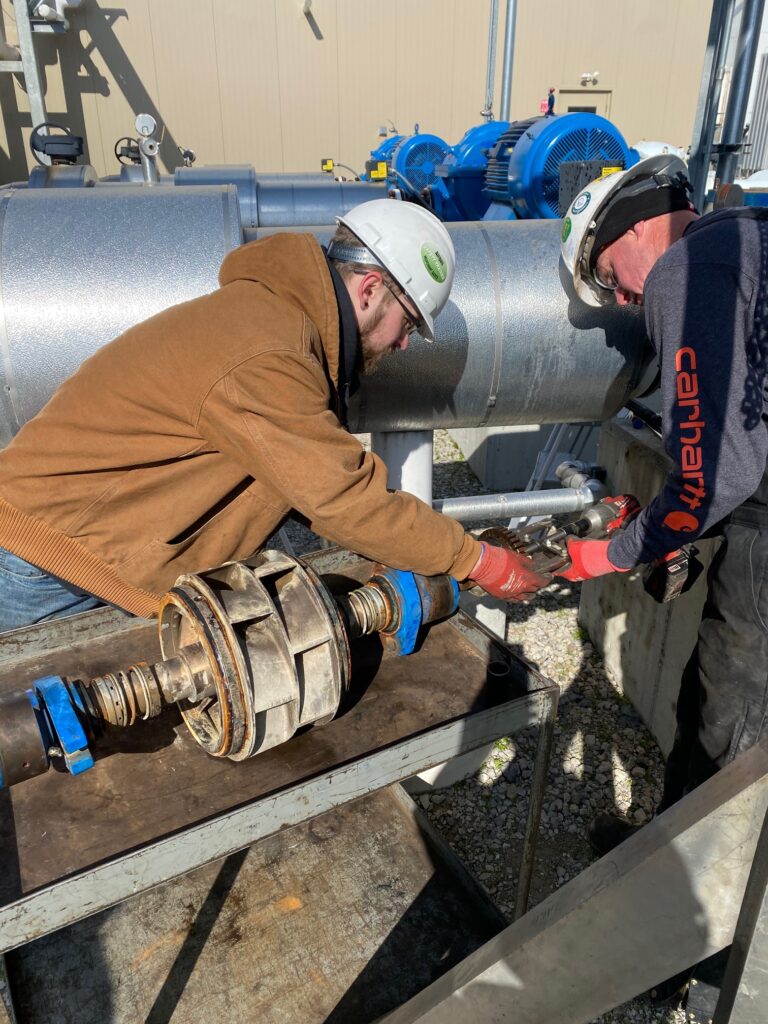
Rather than guessing at where energy is being lost, a proper optimization assessment evaluates a system’s actual operating conditions against its original design intent. That typically means looking at flow and pressure requirements as they exist today (not as they were specified years ago), reviewing whether variable frequency drives or other control strategies could better match output to demand, and inspecting the mechanical condition of the pump itself to rule out wear-related inefficiency before recommending any bigger changes. Our pump optimization services are built around exactly this kind of assessment — identifying where energy savings, reliability gains, and reduced downtime are actually available, rather than recommending a wholesale replacement by default.
The Case for Looking Before Replacing
It’s tempting to assume an aging or inefficient pump simply needs to be swapped out, but that’s not always the most cost-effective answer. In some cases, the pump itself is fine and the inefficiency lies in how the system is controlled or how it was originally sized. In others, a repair to address worn internal components restores performance for a fraction of the cost of a new unit. An optimization assessment helps separate which scenario you’re actually in before money gets spent in the wrong place.
Where This Pays Off Most
Facilities running pumps continuously or near-continuously — think HVAC circulators, municipal lift stations, industrial process pumps, or aquatic facility filtration systems — tend to see the clearest payback from optimization work, simply because small efficiency gains compound over thousands of run-hours a year. If your facility falls into any of those categories and energy costs or unplanned downtime have been creeping up, it’s worth a closer look.
Getting Started
A pump system that’s quietly wasting energy won’t announce itself the way a failing pump will — which is exactly why it’s worth a proactive look rather than waiting for a problem to surface. Contact General Pump Chicago to request a pump system assessment, or visit our Service & Repair page to see the full range of service work we provide alongside optimization, from diagnostics to field repairs.

